
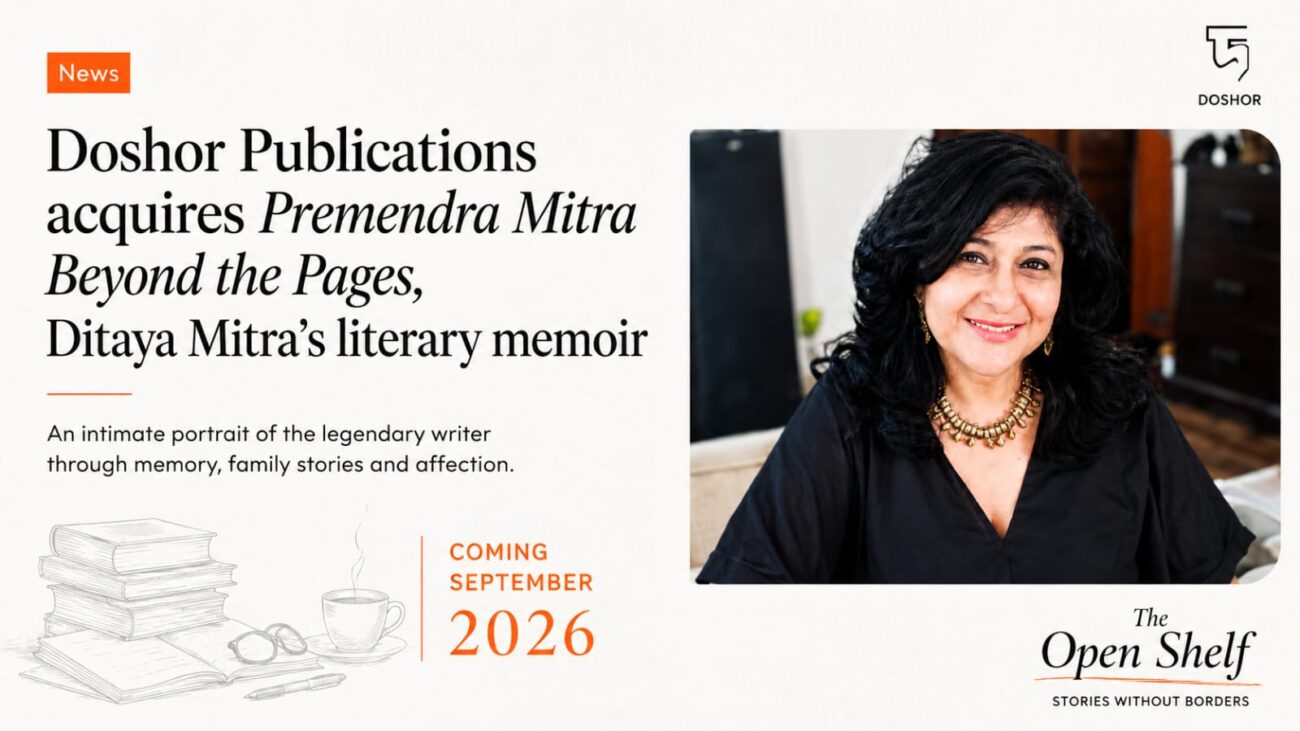
The Open Shelf Desk
For generations of Bengali readers, Premendra Mitra has remained one of literature’s most unforgettable names — the brilliant creator of Ghanada, the master of suspense, imagination and storytelling. But beyond the pages and the towering literary reputation existed another Premendra Mitra: a grandfather, a guardian, a theatre lover, a man of habits, humour and overwhelming affection.
A deeply personal new work by Ditaya Mitra attempts to bring readers closer to that intimate world.
Rather than revisiting the literary icon alone, the piece explores the quieter spaces surrounding him — family dinners, school bus anxieties, theatre outings, music lessons and everyday domestic moments that rarely find their place in literary history. The result is not simply a memoir, but an emotionally textured portrait of a man who existed both as a legendary writer and as an intensely human presence within his family.
What makes the work especially compelling is its warmth. These recollections do not attempt to monumentalise Premendra Mitra further; instead, they gently dismantle the distance between the reader and the legend. We encounter a grandfather who could turn a delayed school bus into a full police-level rescue operation, a man who argued passionately for front-row theatre seats because he wanted his grandchildren to experience every expression on stage, and someone deeply suspicious that music lessons were merely excuses for post-class egg rolls.
Through these intimate anecdotes, Ditaya Mitra captures something often lost in literary conversations — the emotional texture of genius within ordinary life. The stories are humorous, affectionate and deeply visual, filled with old Kolkata rhythms, family conversations and cultural memories that feel instantly alive.
There is also something quietly important about revisiting literary figures through personal memory rather than academic distance. In recent years, readers have increasingly shown interest in the human lives behind iconic authors — not only what they wrote, but how they loved, worried, laughed and inhabited the world around them. This work arrives precisely within that emotional space.
At its heart, the writing reminds us that literary legends are not born solely from intellect or imagination. They are also shaped by domestic rituals, eccentric habits, emotional contradictions and small everyday acts of tenderness. Premendra Mitra’s literary brilliance may belong to history, but these memories restore his humanity.
What emerges through Ditaya Mitra’s voice is not nostalgia alone, but companionship. The legendary author gradually becomes accessible again — no longer only the creator of immortal stories, but also a grandfather waiting anxiously at home, teasing his family over dinner or insisting that theatre must always be experienced from the front row.
For readers who grew up with Ghanada and for younger audiences discovering Premendra Mitra anew, this deeply personal reflection offers something rare: the chance to encounter the man behind the mythology.
And perhaps that is what makes these memories linger long after reading them — they do not simply celebrate a literary icon. They bring him home.
—
The Open Selves
